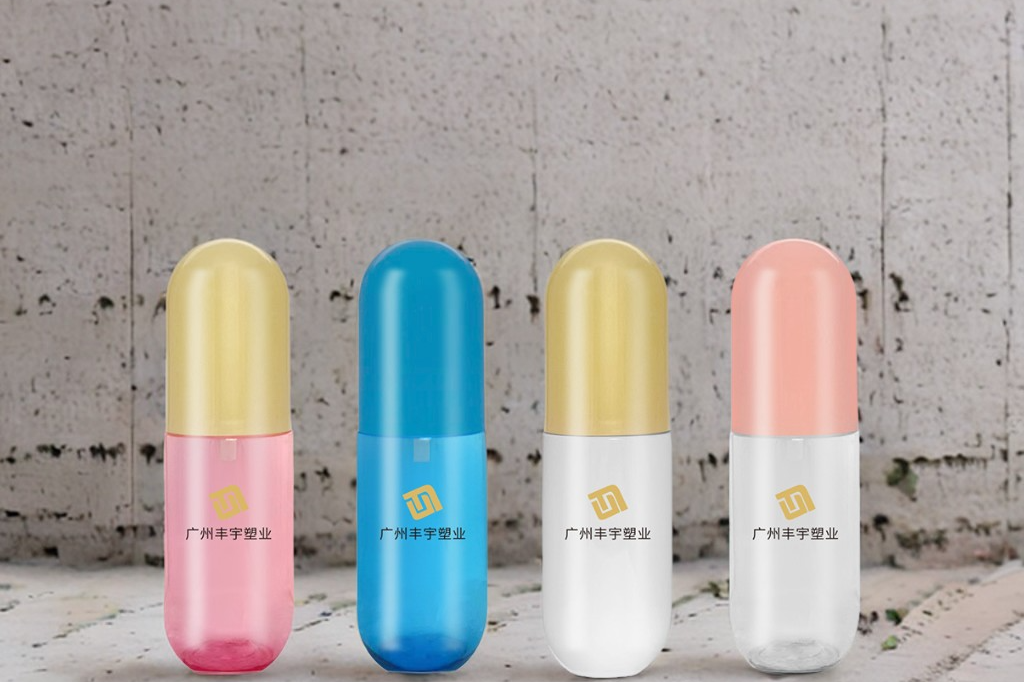
Many customers who do OEM for skin care products often have such a question: Is it better to use glass bottles or plastic bottles for skin care products? In fact, each has its own advantages and disadvantages. It is better to first understand the pros and cons of these two types of bottles and then make a choice based on the customer’s needs. Let’s take a look at the advantages and disadvantages of glass bottles and plastic bottles below.
Glass bottle
Advantages of glass bottles: 1. The composition of glass is relatively stable and is less likely to have a chemical reaction with skin care products. In simple terms, skin care products in glass bottles are less likely to deteriorate.
2. Glass bottles have a sense of luxury. When merchants sell skin care products, they mainly market two concepts: appearance and effect. Transparent glass bottles often give consumers a sense of luxury, and they look very nice when filled with transparent or colored skin care products.
3. Glass bottles are heavier and feel more substantial when held in the hand, giving the impression of being more substantial.
4. Glass bottles are easier and more thorough to disinfect than plastic bottles. The simplest and most thorough method for disinfecting plastic bottles is to wash them with water and then disinfect them with high-temperature baking. Glass bottles can be washed and baked without any problem because glass can withstand high temperatures.
Which is better for skin care products, glass bottles or plastic bottles?
The disadvantages of glass bottles: Glass material is more expensive than plastic material, so the cost of using glass bottles to store skin care products is relatively high. Glass bottles are prone to accidental breakage, and all the skin care products inside will be wasted, which is too wasteful. The shape of glass bottles is fixed, they are large in volume and heavy, and not convenient to carry when going out.
Plastic bottle
Advantages of plastic bottles: Compared with glass products, plastic bottles have a lower density, are lighter, have adjustable transparency, and are less prone to breakage. Plastic bottles have good corrosion resistance, acid and alkali resistance, impact resistance, and high mechanical strength. They are easy to shape, have low production waste, and are easy to color. Colors can be adjusted as needed, making it easier to meet packaging design requirements. Most importantly, plastic bottles have a cost advantage over glass bottles, as they are relatively cheaper.
The disadvantages of plastic bottles: The disadvantages of plastic bottles are also quite obvious. The first impression people have is that they are not environmentally friendly. The plastic material is prone to chemical reactions with skin care products, which can easily cause the skin care products to deteriorate. Overall, they look relatively cheap and are not suitable for high-end products.
To sum up, is it better to use glass or plastic bottles for skin care products? I believe everyone has a general understanding by now. In conclusion, there is no absolute good or bad when it comes to packaging materials. Customers should choose the appropriate packaging material based on the specific situation of their different products, taking into account various factors such as brand positioning, cost, and sales channels. The most suitable option is the best, and suitability should be the starting point for all choices.